
Begum Samru
The story of Begum Samru, a woman who is not only linked to many strands of history, but is also a page in history itself.
HISTORY/इतिहास
11/22/20254 min read
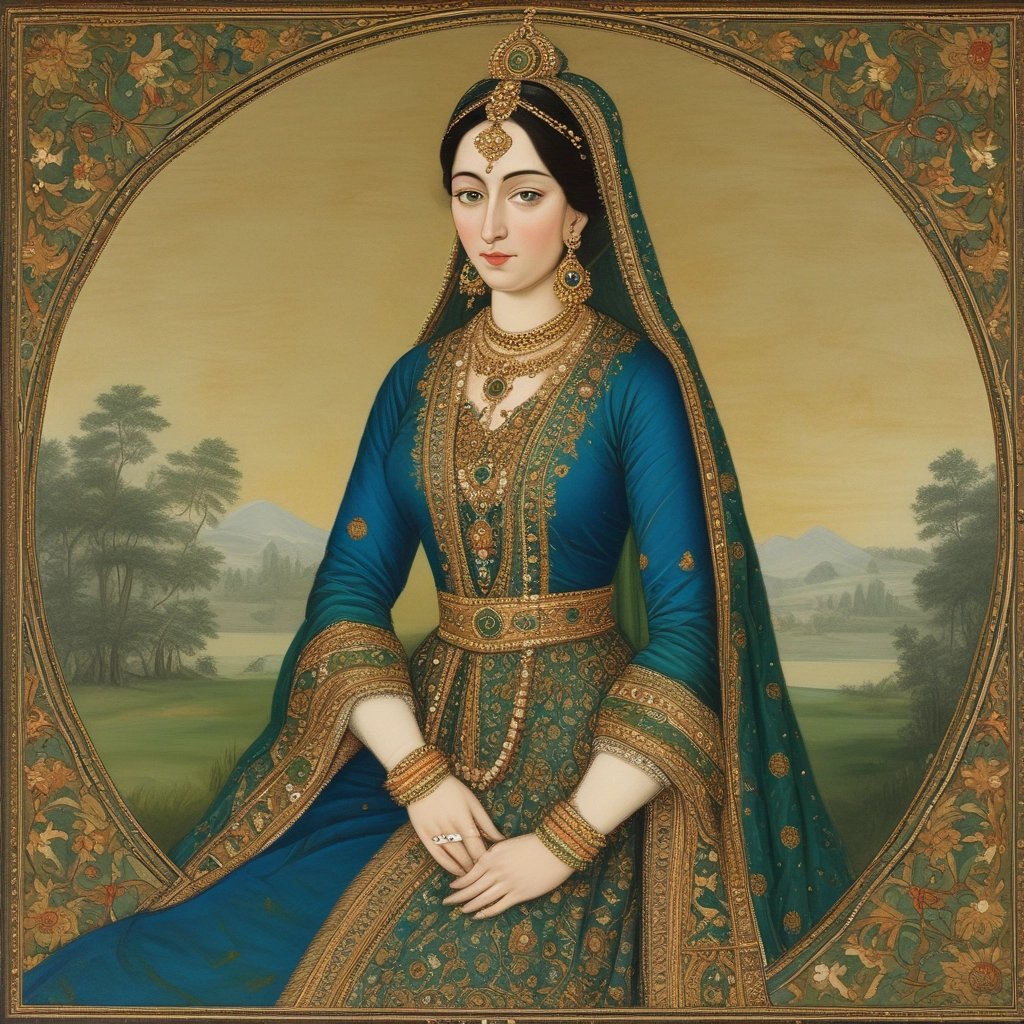
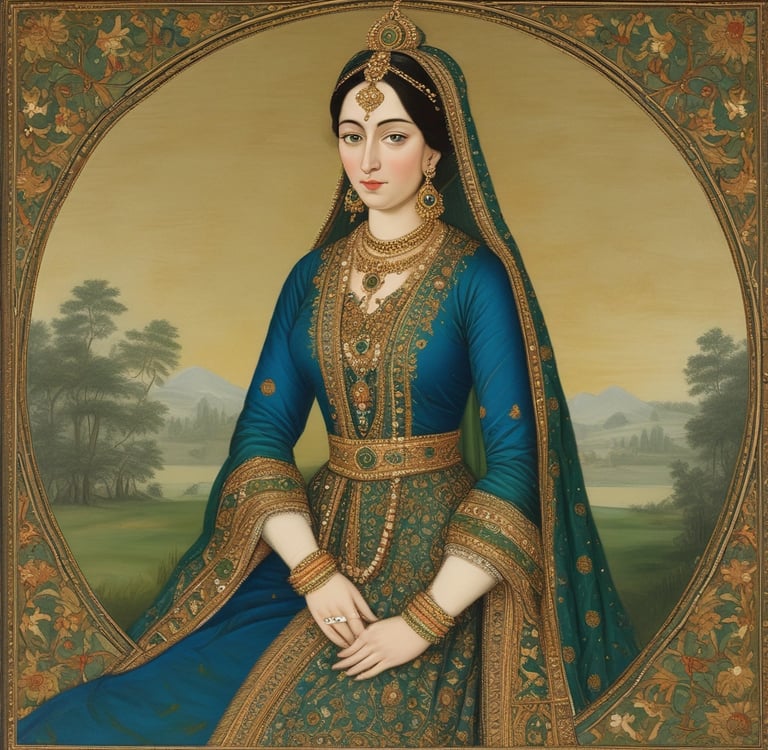
Zeb-un-Nissa: From Farzana of Chandni Chowk to the Lioness of Sardhana
Delhi, a sweltering night in 1765. In Chawri Bazar, rows of lanterns trembled like hundreds of tiny suns descending to earth. The air was thick with the scent of rose attar, a faint haze of opium, and the jingling of ghungroos. At Khanam Jaan’s kotha, a grand mehfil was in full swing. On the central stage danced a girl of just fourteen. Barely over four-and-a-half feet tall, her skin so fair it seemed moonlight had been poured over her, her eyes a mesmerising green-blue—like a slice of Kashmir’s valleys trapped inside them. Her name was Farzana. When she spun, her tresses danced in the air, and the entire gathering held its breath.
That night, a tall, broad-shouldered European with old scars etched across his face stood at the doorway. Walter Reinhard, called “Sombru” by the locals—or simply Samru. In Patna he had orchestrated the massacre of one hundred and fifty Englishmen in a single night; mothers hushed their children to sleep with warnings of his name. He watched Farzana, then pulled out a purse heavy with gold mohurs and slammed it on the table.
“This girl is mine from tonight.”
Silence fell over the mehfil. Farzana did not stop dancing. She smiled, walked closer with the ghungroos still ringing, and whispered,
“Huzoor, I belong to no one. If you wish to walk with me, come—but do not try to own me.”
For the first time, Samru laughed. He bowed his head and said, “Let’s go.”
And just like that, the dancing girl of Chawri Bazar was suddenly riding through the streets of Delhi on horseback—pistol at her waist, dupatta over her shoulder, side by side with Samru.
The years that followed were soaked in blood, gunpowder, and betrayal. From Lucknow to Rohilkhand, Agra to Bharatpur, Deeg to the Doab—wherever there was war, Samru’s cannons roared, and Farzana rode with him. By day the soldiers drilled; by night she stitched the wounds of the injured. When needed, she picked up a musket herself. The troops began calling her “Begum Samru”—Samru’s name melting effortlessly on their tongues.
1778. The fort of Agra. Samru suddenly fell ill—poison or a heart attack, no one ever knew. As he lay dying, he held Farzana’s hand and whispered, “The jagir will remain yours… promise me you will never weaken.”
Farzana shed no tears. She simply nodded.
Samru’s body was not yet cold when the European officers threatened mutiny. “How can a woman command us?”
The Begum lit her hookah, took a long drag, and replied, “Those who wish to stay may stay; those who wish to leave may go. But remember—I am Farzana, the one who once tamed even your Samru.”
The very next day, eighty-two European officers and four thousand sepoys petitioned Emperor Shah Alam II: “We will fight under Begum Samru.” The Mughal emperor was stunned. A courtesan? But when the Begum paraded her army—French gunners, Rajput cavalry, Jat infantry—the imperial seal was pressed. The jagir of Sardhana, with an annual revenue of nine lakh rupees, became hers.
Now the Begum was no longer just a four-and-a-half-foot woman. She wore a turban, slung a sword over her shoulder, and rode into battle on horseback. Soldiers said, “When the Begum throws off her cloak, the enemy is blinded.” Superstitious tongues whispered, “She is a witch.”
1788. The battlefield of Gokulgarh.
Emperor Shah Alam II’s royal camp was surrounded. The Rohilla chieftain Najaf Quli Khan charged with drawn sword to seize the emperor. Corpses everywhere, the stench of gunpowder, screams. Suddenly a palanquin thundered onto the field. The curtain was flung aside. Two emerald eyes flashed. The Begum stepped out—barely over four-and-a-half feet, yet in that moment the entire universe seemed to live inside her.
She roared, “Fire the cannons!”
The thunderous barrage pushed the Rohillas back. The Begum reached the emperor. Shah Alam fell at her feet, weeping, “Zeb-un-Nissa! You have saved my life for the second time.”
That very day the emperor bestowed upon her the title “Zeb-un-Nissa”—Jewel Among Women.
1795. Love knocked again. A French officer, Le Vassoult—tall, fair, with a honeyed French tongue. The Begum fell deeply in love. Rumours spread of marriage. The troops mutinied. One night the couple tried to flee—Le Vassoult on horseback, the Begum in her palanquin. A shot rang out. Le Vassoult was hit. He turned the pistol on himself. When the Begum saw it, she plunged a dagger into her own chest. Yet death rejected her too. She survived. And never trusted another man again.
1803. Lord Lake was marching on Delhi. The Begum understood—the times had changed. Brains now mattered more than swords. She negotiated a treaty. When Lord Lake arrived at Sardhana, she embraced him and laughed, “This is merely a repentant child kissing her priest.” The soldiers panicked, but the Begum handled everything.
In 1781, at the age of thirty, she converted to Roman Catholicism and took the name Joanna Nobilis. In Sardhana she built a magnificent church—the Basilica of Our Lady of Graces—which still stands today. She had only one true friend in life—Begum Umda. They stood by each other through everything.
Her palace in Chandni Chowk still stands—Bhagirath Palace—gifted to her by Shah Alam II.
On a cold January morning in 1836, the eighty-three-year-old Begum breathed her last. She left behind immense wealth—diamonds, gold, cannons, jagirs—but no heir. Even today in Germany, an organisation called the “Reinhard Erbgemeinschaft” fights in courts over her inheritance.
On her marble tombstone is inscribed:
“Here lies Joanna Nobilis Sombre, Begum Samru, Princess of Sardhana, died 27th January 1836, aged 83 years.”
The fourteen-year-old girl from Chawri Bazar whom the world called a courtesan
became the woman who twice saved a Mughal emperor’s life,
held back the Marathas in the Battle of Assaye,
cleverly forged peace with the British,
and lived on in history as India’s only Catholic ruling princess.
Hers is no fairy tale.
It is truth.
And truth is always far more beautiful—and far more dangerous—than any fairy tale.
Contact us
Call +91- 9193233555
© 2026. All rights reserved.